Fabric guide
Six knit grades compared like for like, so you can choose by hand-feel, coverage, climate and price instead of guessing from a single swatch. Every grade is Tanboocel® bamboo viscose, cut in our own lines and certified to OEKO-TEX® STANDARD 100 Class I.
01 — The ladder
Price is quoted against the 220 gsm grade, which is where most first orders start. Grade names link to a style currently in production at that weight.
| Grade | Hand-feel | Shrinkage | Anti-pilling | Best for | Climate & market | Price vs 220 |
|---|---|---|---|---|---|---|
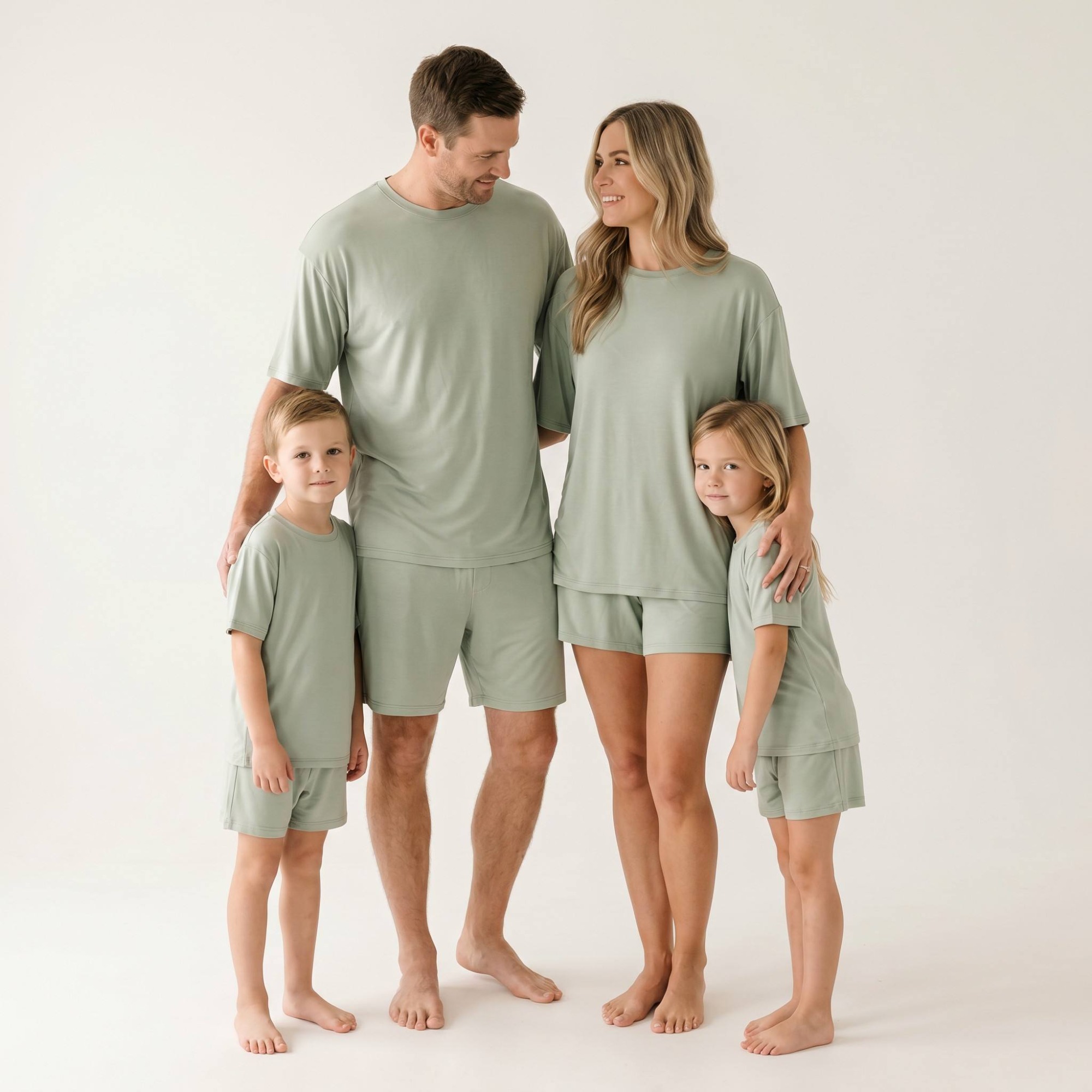 Lightweight 190 GSMSingle jersey |
Light and drapey, cool to wear, slightly translucent in pale colours | 4% or less | 3.0 to 3.5 | Adult summer short-sleeve sets, baby summer wear, summer rompers, bibs | Hot-season markets: GCC, Southeast Asia, southern US | −8% to −12% |
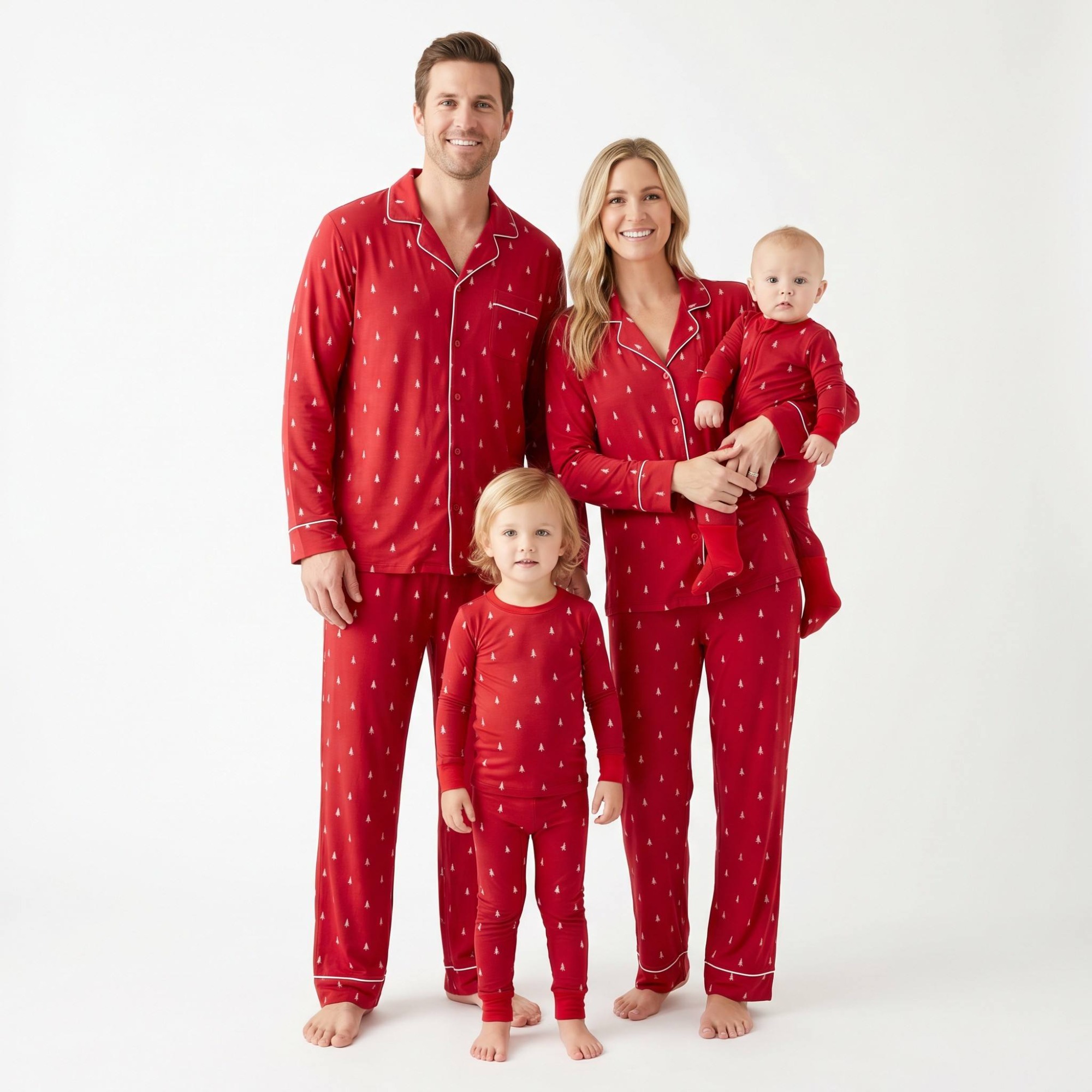 Midweight 220 GSMSingle jersey, best seller |
Soft with a little body, opaque, good drape and recovery | 4% or less | 3.5 or better | Adult pyjama sets, baby rompers and sleepwear, family matching, sleep bags, robes | All year, all markets: the grade we sell most | Base |
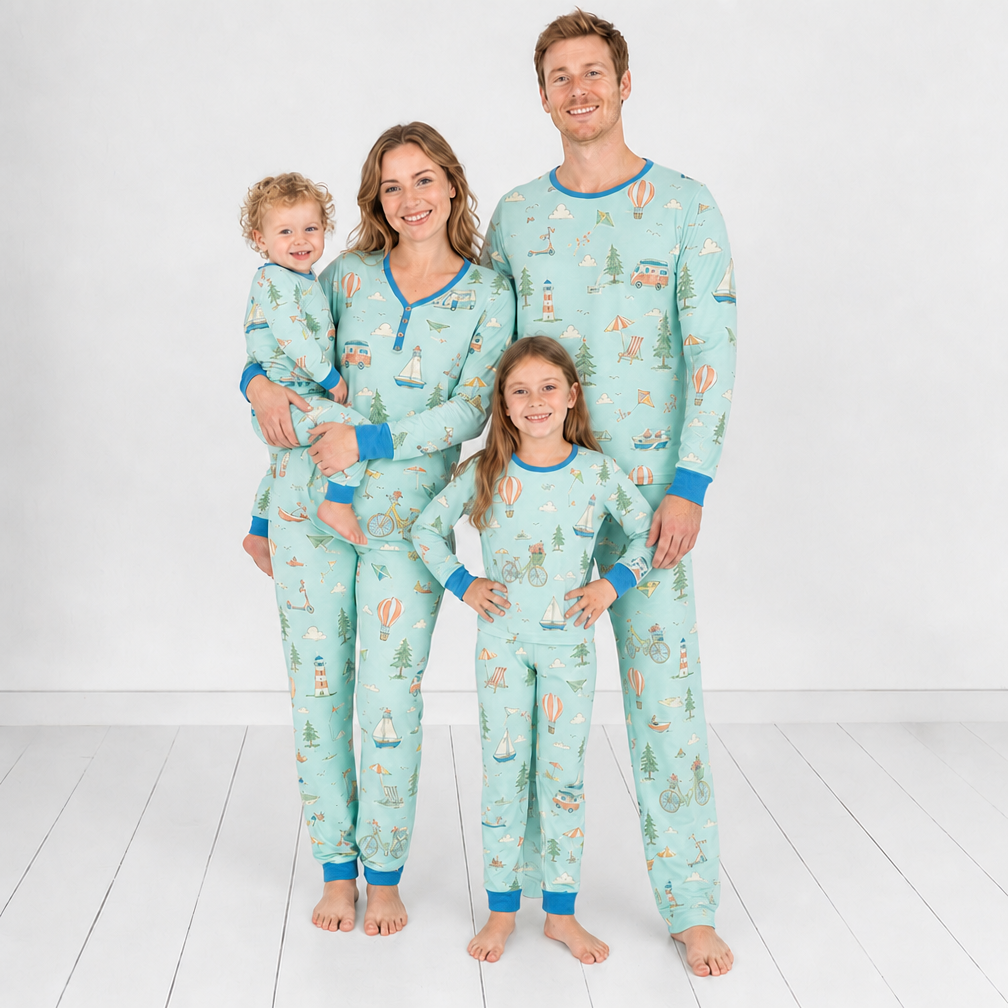 Heavyweight 240 GSMSingle jersey |
Substantial and structured, covers well, holds shape, still drapes as a single knit | 4% or less | 3.5 to 4.0 | Premium upgrades, autumn and winter pyjama sets, heavy robes, sleep bags | Autumn to winter; temperate and cold: North America, Northern Europe, Japan and Korea | +10% to +15% |
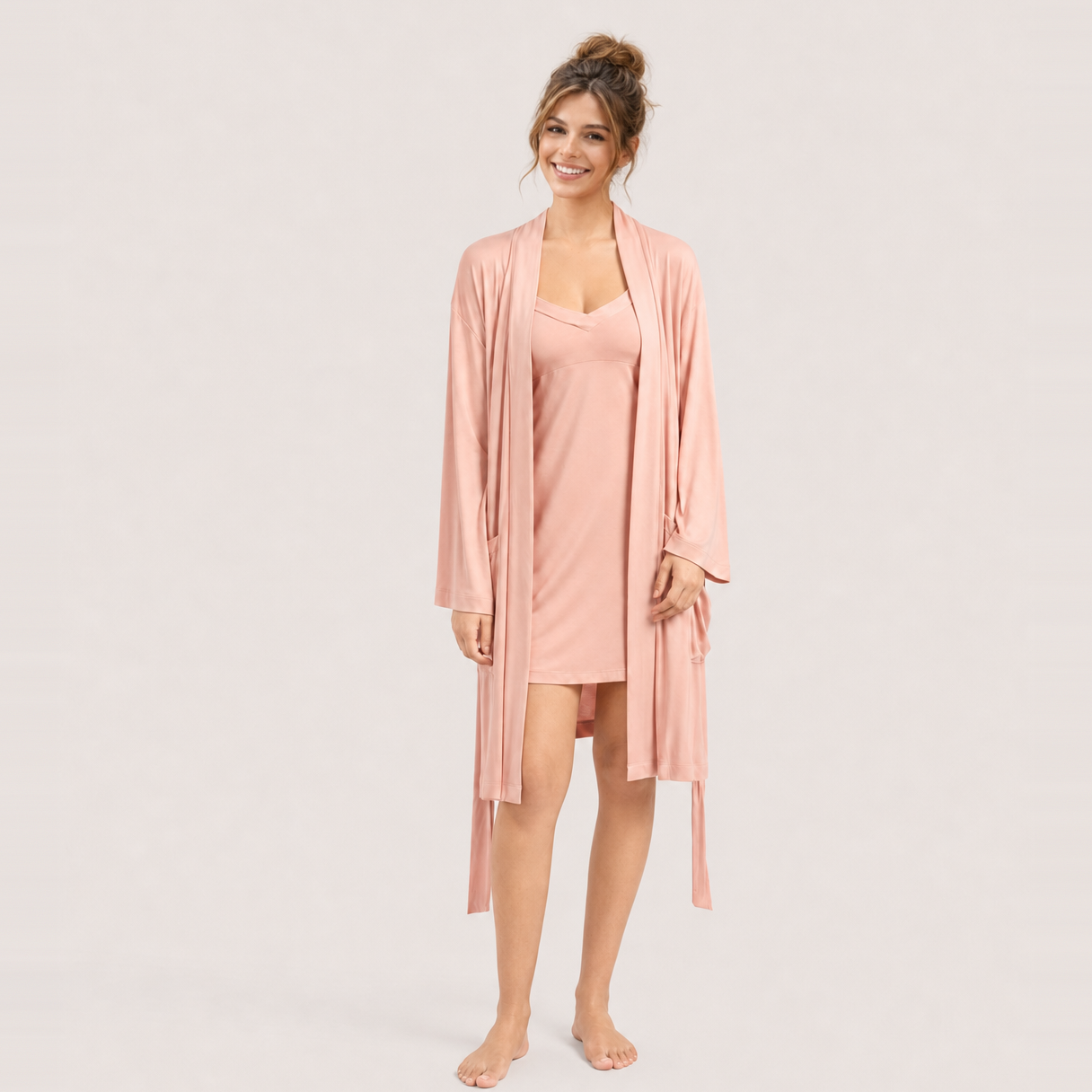 Extra heavyweight 260 GSMSingle jersey |
Heavy and firm, reads like outerwear, the lower-cost route to a heavy hand | 4% or less | 3.5 to 4.0 | Winter pyjamas, loungewear jackets, outerwear rompers, heavy family sets | Cold-season outerwear; quoted per order | +20% to +25% |
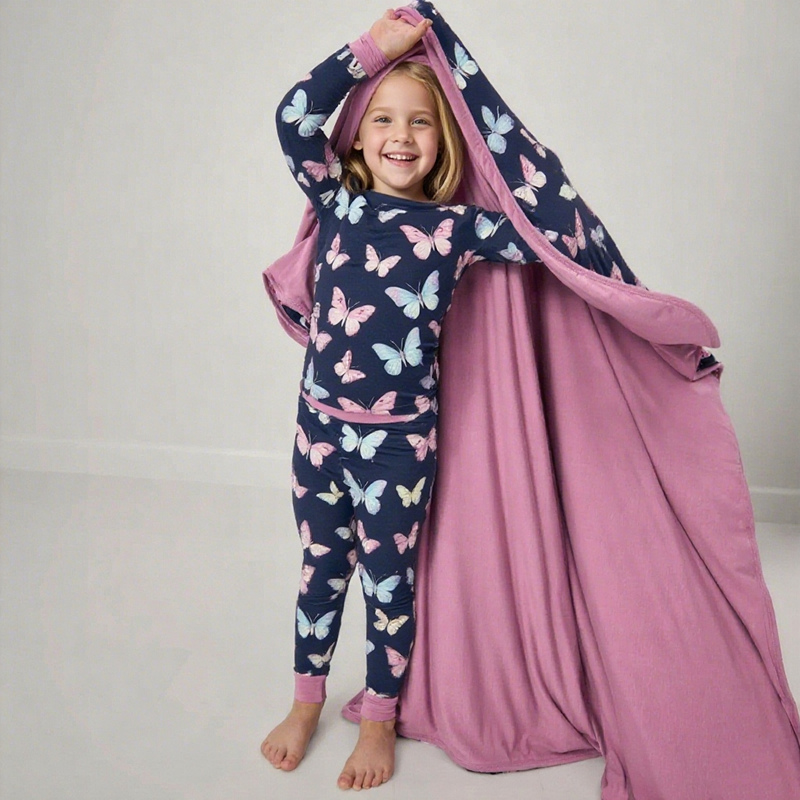 Extra heavyweight 260 GSMInterlock, double knit |
Thick and warm, flat and clean on both faces, does not curl, holds shape best | 4% or less | 3.5 to 4.0 | Premium winter sets, sleep bags at the warm end, heavy robes | Autumn to winter in cold markets | +25% to +32% |
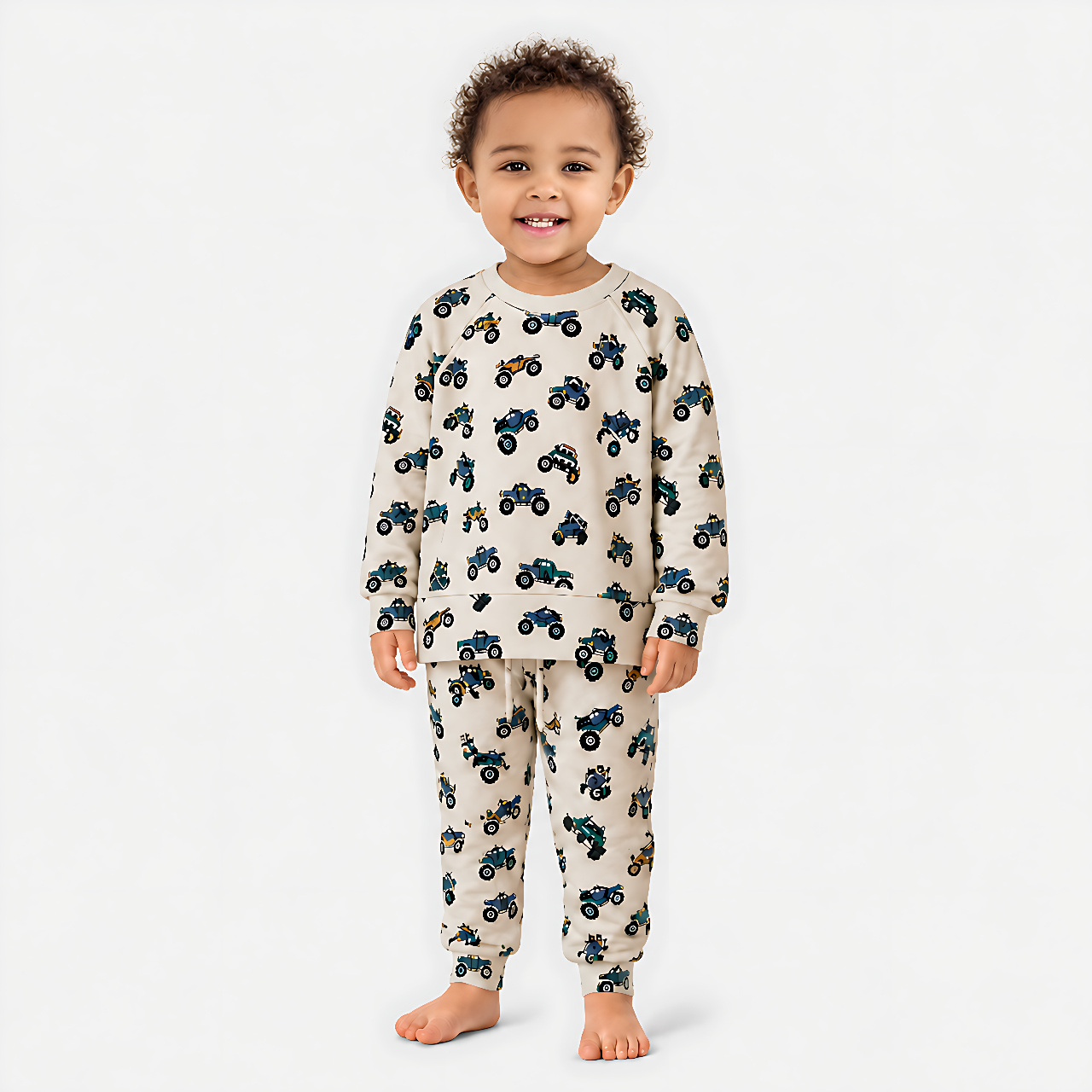 260 GSMFrench terry |
Absorbent and breathable, sweatshirt hand, lofty and warm, brushed or looped back | 4% or less | 3.5 to 4.0 | Robes, sweatshirt-style loungewear, family outerwear sets, blankets | Autumn and winter, outerwear and gifting | +30% to +40% |
Shrinkage holds at 4% or less and colour fastness at Grade 4 across all six grades. Anti-pilling is the one figure that moves with the weight: 3.0 to 3.5 at 190 gsm, 3.5 or better from 220 gsm up, because a thinner knit has less fibre to lock the surface pile into.
02 — What the number changes
Weight is the easy number to quote and the hardest to judge from a photo. These are the four trade-offs buyers notice after the goods land.
Coverage
At 190 gsm a pale colour can read through in daylight. 220 gsm is where a light colour stops showing what sits underneath, which is the reason most light-colour baby programmes sit there.
Drape and recovery
Single jersey drapes and recovers softly, interlock stays flat and keeps its shape, French terry bulks up. Choosing the structure matters as much as choosing the number.
Warmth
Past 240 gsm, warmth comes from the build rather than the knit: interlock and terry trap more air, and sleep bags are specified in TOG because the fill does the work.
Cost
Against a 220 gsm base, 240 gsm adds 10 to 15 percent, 260 gsm interlock 25 to 32 percent, and French terry 30 to 40 percent. The 190 gsm grade is 8 to 12 percent below base.
03 — The other half of the spec
The same number can describe three different fabrics, so we confirm structure, blend and build before a price can be fixed.
95% bamboo viscose with 5% elastane is the standard stretch base in jersey and rib; 97/3 gives a firmer, less stretchy hand; 100% bamboo viscose covers the woven options.
Jersey, interlock and French terry are three constructions, not three weights. Each has its own cost base at the same gsm.
0.5 TOG is a two-face flat blanket with nothing between; 1.0, 1.5 and 2.5 TOG are quilted with a fibre-fill layer. A 2.5 TOG bag is a quilted build, not a heavier knit.
Our towel line runs 300 to 600 gsm in cotton or bamboo terry. That is a different construction with a different price base, not an apparel grade.
Swatches and lab dips are approved before bulk: sampling takes 7 to 15 days, bulk runs 45 to 60 days after sign-off, and goods ship DDP from Qingdao.
04 — Choosing
Step 01
Hot-season markets and dark colours go to 190 gsm. A programme that has to sell across the calendar goes to 220 gsm. Cold markets and premium price points start at 240 gsm.
Step 02
Sleepwear and rompers sit in single jersey. Sleep bags and shape-holding sets want interlock. Robes, sweatshirt shapes and outerwear want French terry.
Step 03
Read the delta from the table above against your target retail, and note that each grade opens at 300 pieces per style and colour.
Step 04
Ask for the two grades closest to your idea rather than one, in your colour, and compare them in daylight. That is the only test that settles coverage.
Questions
Start at 220 gsm for a first order that has to work across seasons. Go to 190 gsm for hot markets and dark colours, and to 240 gsm or above when you want a heavier, more premium hand.
No. They weigh the same and behave differently. Single jersey is one knit face, interlock is a double knit that is flat on both sides and does not curl, and French terry carries a looped or brushed back. Structure, not only weight, decides warmth, coverage and price.
The six grades above are what we run as standard. Anything outside the ladder is quoted per order, and the 260 gsm single jersey is already a per-order grade rather than a stock one.
The standard stretch base is 95 percent bamboo viscose with 5 percent elastane, in jersey and rib; 97 percent bamboo with 3 percent elastane is available for buyers who want less stretch, and 100 percent bamboo viscose covers the woven options. Modal, Lyocell and organic cotton sit alongside for buyers who need a different label story.
Shrinkage stays at 4 percent or less after washing across all six grades, and colour fastness holds Grade 4. Anti-pilling reads 3.0 to 3.5 on the 190 gsm grade and 3.5 or better from 220 gsm up. Swatches and lab dips are approved before bulk.
Tell us the garment, the market and the target price. We will come back with a weight recommendation, the price step for your grade and a swatch in your colour.
Contact us →


